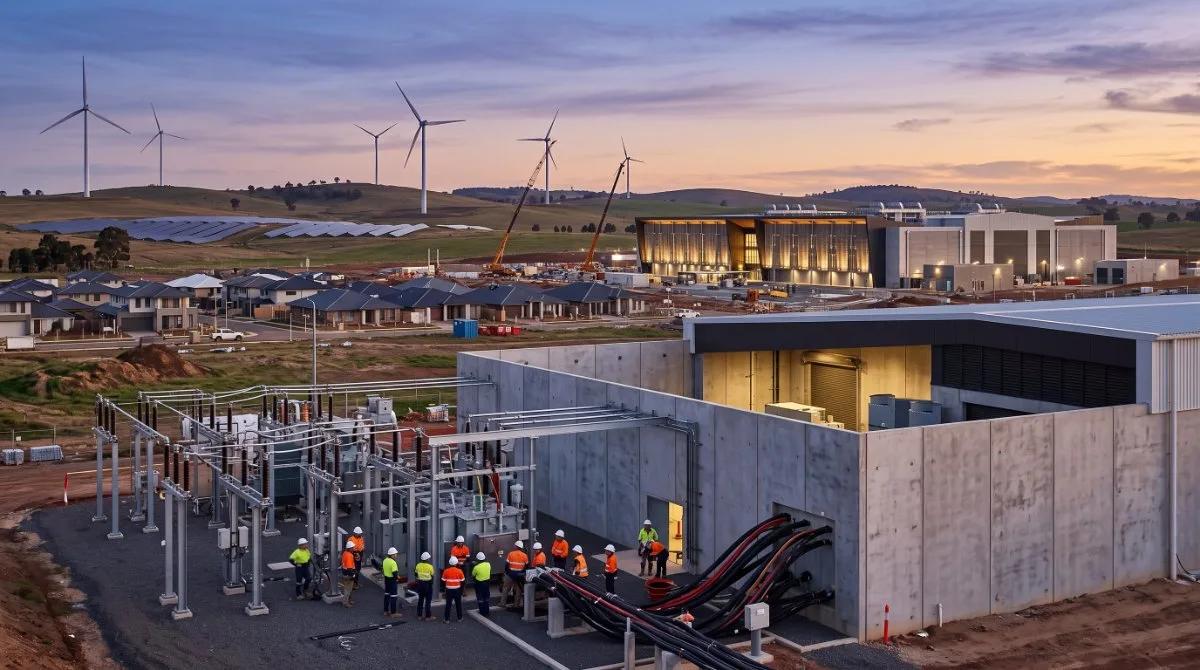
If you have spent years doing electrical, instrumentation or energy work, Australia is short of people like you, and the gap is widening. A new workforce report from the Powering Skills Organisation estimates the country needs roughly 72,000 extra electricians, technicians and related trades workers by 2030. Only a year earlier, the same body put the shortfall at 42,000.
For experienced workers, the question is less about whether there is demand and more about whether your skills are on paper in a form that Australian employers and licensing bodies can recognise.
Where the extra demand is coming from
The biggest driver of that jump is data centre construction. Treasury figures put the value of the data centre pipeline at around $150 billion by 2030. More than 160 data centres are already running and another 130 are planned, and that sector alone is expected to need about 13,000 additional energy trades workers.
At the same time, the Housing Accord aims for 1.2 million new homes, and the renewable energy rollout keeps moving. All three priorities draw on the same electricians and technicians, and none of them is slowing down.
What the competition for workers looks like on the ground
Inside Australia, the shortage is showing up as a contest for staff. Big infrastructure jobs are offering pay and conditions that smaller electrical contractors cannot match, apprentices are being lured away before they finish, and the small businesses that train most new tradespeople are losing experienced people.
Around 70% of apprentices complete their training, which is a solid rate, but it still does not produce enough qualified workers quickly enough. Industry groups have suggested measures such as hiring quotas on major projects and compensation for small firms that lose staff they trained. That suggests the pressure on trades capacity will stay in the spotlight for some time.
Why your qualification matters as much as your experience
Electrical work in Australia is licensed, and a licence generally sits on top of a nationally recognised qualification. Skilled visa pathways also tend to involve a skills assessment, which usually looks for a qualification that matches your occupation. So years of experience, on their own, may not be enough to step straight into the work you are capable of doing.
This is where Recognition of Prior Learning (RPL) can help. RPL compares evidence of what you have already done with the units of competency in a qualification. Useful evidence includes:
- a detailed work history and position descriptions
- references from supervisors or clients
- photos of installations, switchboards or systems you have worked on
- payslips, existing licences and tickets
A Registered Training Organisation (RTO) reviews that evidence. If it meets the requirements, the RTO can issue the qualification; if there are gaps, you may only need to complete the units you are missing.
Depending on your background, qualifications worth looking at include the Certificate III in Electrotechnology Electrician, the Certificate IV in Electrical Renewable Energy for solar and battery work, or the Certificate III in Instrumentation and Control for technicians.
Developments worth keeping an eye on
Over the next 12–18 months, a few changes could shape where the opportunities sit:
- Workforce guidelines for data centres. Since March, the federal government has been encouraging data centre operators to invest in local training. Any formal skills or hiring conditions on big projects may influence which employers recruit and what qualifications they ask for.
- Skilled occupation lists. A shortfall this large often feeds into future reviews of occupation lists, and electrical and energy trades could gain priority.
- Training incentives. The existing $10,000 clean energy apprenticeship incentive shows the government is willing to fund workforce growth, and similar support may follow.
- Regional projects. Many data centre and renewables builds are outside the capital cities, which may suit people open to regional work and regional visa streams.
Getting ready
Demand for energy trades is likely to stay strong for years, but the people best placed to benefit are those whose skills are already formally recognised. If you have the experience, start collecting your evidence now and check which qualification fits the work you do. That groundwork can make a licence application or skills assessment much smoother when the time comes.