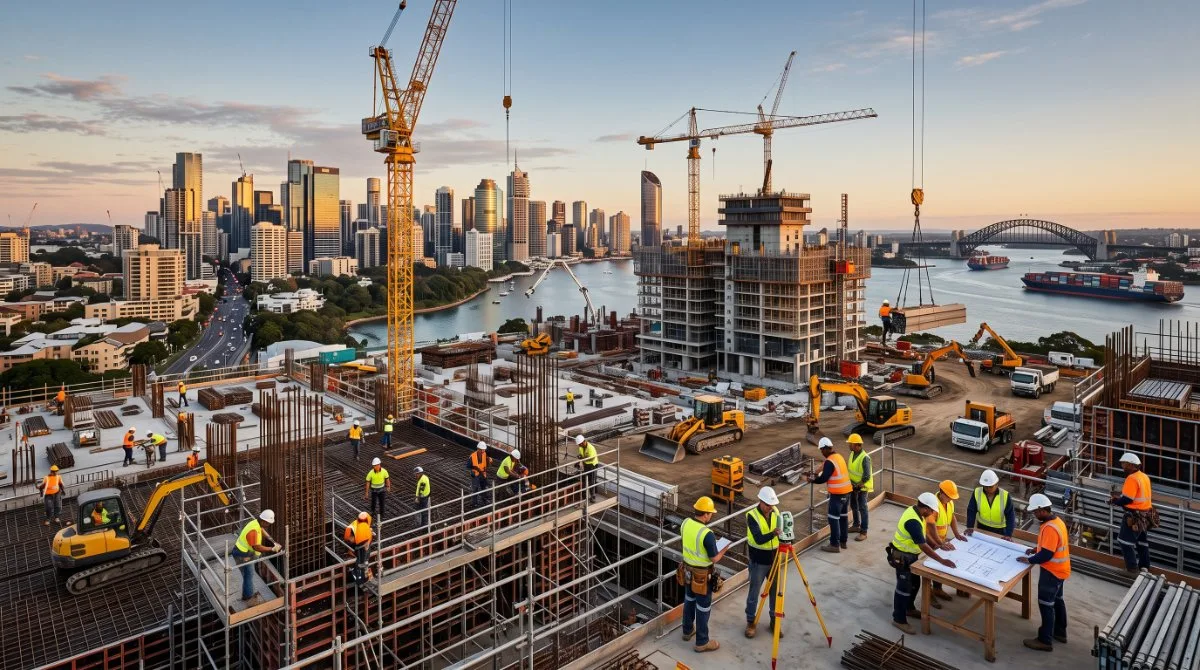
Canberra is building at pace, yet the number of people learning to lay its bricks has dropped to a level that is hard to believe. Across the whole ACT region, only seven people are currently training as bricklayers. Over the same period that apprentice numbers fell by 20 per cent, the local construction workforce grew by 10 per cent.
For experienced bricklayers, in Canberra or thinking of moving there, that gap is worth understanding. So is a lesser-known detail about how the trade is regulated in the territory.
A trade without a licence
In the ACT, bricklaying is not a licensed occupation. A person can legally lay bricks on a home or a commercial job without showing any qualification. Trainers and builders say the result is visible on site: uneven work from people who never had proper training.
You might think that makes a qualification pointless there. In practice it can work the other way. When anyone is allowed to pick up a trowel, builders have very little to go on when they hire. A nationally recognised qualification gives them something concrete: proof that your skills have been checked against an industry standard. Local business owners who have run bricklaying crews for many years say they have plenty of work. What they lack is reliable, skilled people.
Why the shortage looks set to last
This is not just a dip in the building cycle. Several pressures are piling up at once:
- Fewer places to train. Most bricklaying apprentices learn on houses, and home building in the ACT is quiet right now. Commercial and infrastructure work, including the light rail extension, is keeping labour demand high, but fewer builders are taking on a four-year apprenticeship.
- Apprentices dropping out. The Housing Industry Association notes that many more apprentices start than finish. The work is physically tough, and apprentices who spend their days labouring rather than practising trowel skills often leave early.
- An older workforce. On many Canberra sites, tradespeople over 40 are the norm. When they retire, their experience goes with them unless new workers arrive.
On top of all this, the ACT government has committed to 30,000 new homes by 2030. Reaching that target with seven trainees in the pipeline does not add up.
Turning years on site into a qualification
Plenty of capable bricklayers learned the trade on the job, here or overseas, and never finished a formal apprenticeship. Recognition of Prior Learning (RPL) is designed for people in that position. Your evidence, such as references from builders, photos and videos of walls and structures you have built, payslips and any tickets you hold, is compared with the units of competency in a nationally recognised qualification. A Registered Training Organisation (RTO) assesses it and, if it meets the requirements, issues the qualification.
For most bricklayers and blocklayers, the matching qualification is the Certificate III in Bricklaying and Blocklaying. If you already run crews or manage jobs, you may also want to look at the Certificate IV in Building and Construction as a next step.
Getting ready to use the opportunity
Strong demand is welcome, but because the ACT does not check qualifications for this trade, you need to show your skills yourself. A few things help:
- Keep a simple portfolio of your work, with dated photos and the type of job (residential, commercial or infrastructure).
- Ask the builders and supervisors you work with for written references that describe the tasks you carried out.
- If you are coming from overseas, gather this evidence before you leave, while past employers are easy to reach.
- Be realistic about the physical demands. It is hard work, and employers value people who know that.
Canberra's training numbers show a trade that is struggling to replace itself, and that kind of shortage tends to reward people who can prove their skills. If you have years of bricklaying behind you, check whether your experience matches a recognised qualification.